GrimKeep Combat, Dice, and Mult
Five-dice turns, combo scoring, defense splits, sacrifices, and reading enemy intents.
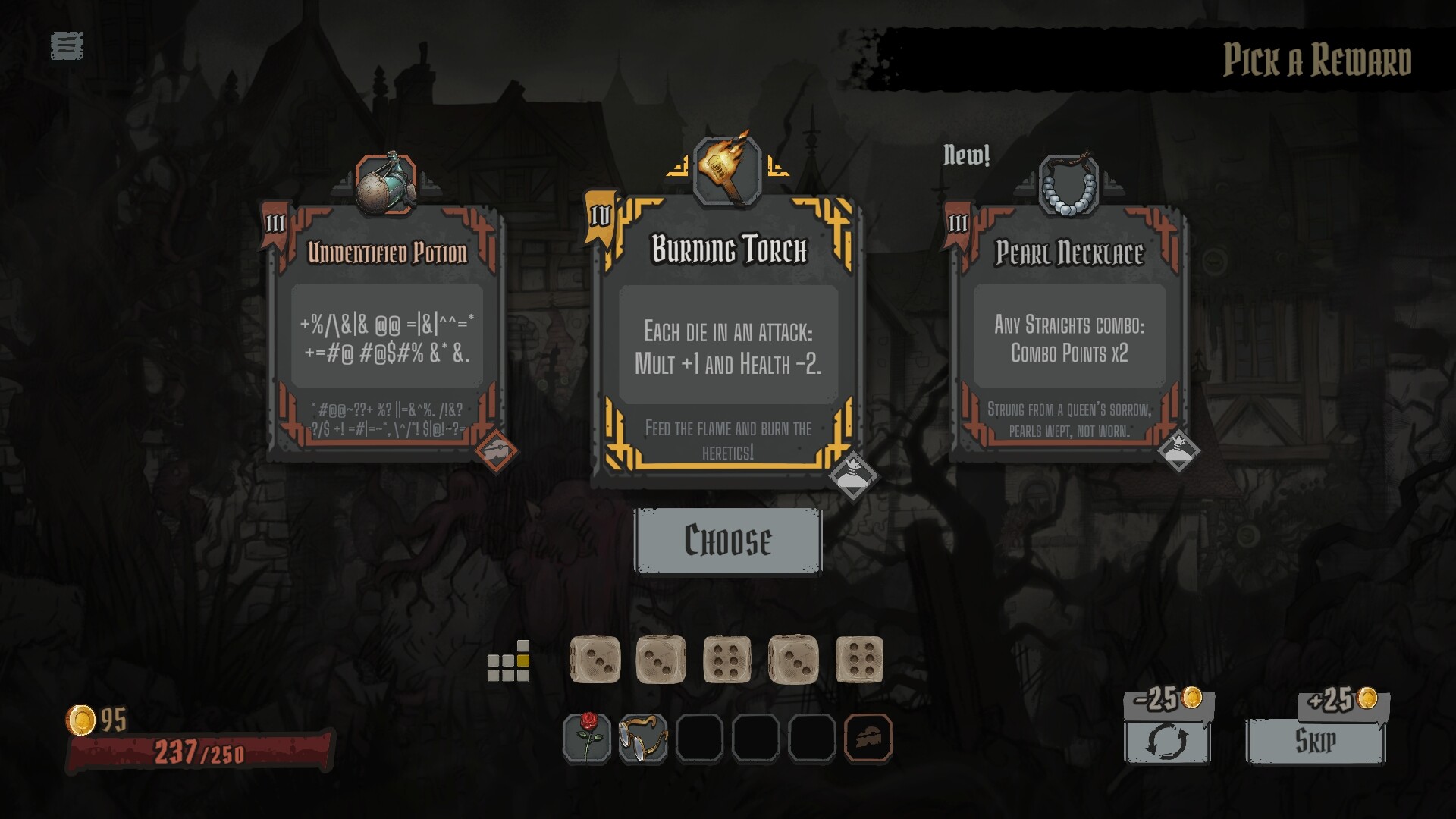
Combat is where GrimKeep stops being a dark fairytale mood piece and becomes a math puzzle you can feel in your hands. This guide unpacks the fight loop the way Resolution Games describes it in developer posts and demos: five dice, rerolls, poker- and Yatzy-style combos, combo points plus Mult, defense from unsubmitted dice, and enemy intents that force honest risk decisions. Use it as the mechanical companion to How to Play. When you are ready to turn fight wins into a lasting machine, jump to Builds & Synergies and the heroes hub.
Anatomy of a fight
You enter combat from the node map with a bag you have been editing all run. The game deals you a turn of five dice. You roll, inspect the faces, and spend free rerolls to chase shapes you recognize from poker and Yatzy: pairs, straights, of-a-kind packages, and related combo lines. Combos award points. Those points combine with the numeric faces on the dice you submit. The combined score is then multiplied by Mult — the lever that turns tidy early hits into late-run artillery.
Before Mult resolves, your items get a say. Inventory pieces can raise Mult, amplify specific combos, trigger on certain faces, or inject status effects. That is why two players with the same dice faces can print wildly different damage: the bag sets probability; the inventory sets the formula.
Rerolls: free, banked, and bought
Free rerolls are the baseline. How you treat leftovers depends on the hero:
- Huntress keeps unused rerolls between rounds, so skipping a greedy reroll can be an investment. Items like her Wolf Tooth Necklace line reward that banked count with Mult.
- Beast can push past free rerolls by spending health (commonly 10 HP per extra), which turns HP into consistency.
- Other heroes remix the economy — Feral’s Mult-on-sixes identity, for example — so always read the kit page on Players before you invent a “universal” reroll rule.
Good combat players reroll toward combo density, not toward a single pretty face. A turn with overlapping pairs and a straight fragment often outscores a lonely five-of-a-kind fantasy that never arrives.
Combo points, then Mult
Think of scoring as a pipeline:
- Faces — raw numbers on submitted dice.
- Combos — pairs, straights, kinds, and related shapes that add combo points.
- Item modifiers — bonuses that touch faces, combos, or Mult directly.
- Mult — the final multiplier before damage lands.
Developer feedback after Steam Next Fest noted that many first-time players treated combat like “find one combo and attack,” while the system happily scores multiple combos in the same submission. Train yourself to submit packages that keep several combo lines alive when the rules allow. That habit alone raises average damage without finding a new legendary item.
Mult is also why early Mult items matter more than raw face upgrades. A modest Mult bump compounds every future roll. That is the spine of most guides on builds and synergies.
Attack versus defense splits
Not every die must go into the attack. Dice you withhold can form a defense score using similar combo and face logic. You can also choose a full-defend line when the intent is lethal and your Mult package is not ready. Official anatomy-of-a-fight explainers show examples such as submitting a three-of-a-kind for damage while leaving a pair back for defense.
The split decision is the heart of GrimKeep combat literacy:
- If the enemy intent is small and your Mult items are hot, lean attack.
- If the intent would delete you, prioritize defense or a sacrifice plan.
- If you are one shop away from a spike, surviving with a thinner hit is correct.
Enemy intents
Monsters telegraph what happens after your turn. Commonly that is a damage number; sometimes it is a special action. Intent reading should happen before you spend the last reroll. A 40-damage banner means something different at 45 HP than at 200 HP, and it means something different again if you still have a sacrifice available. Later demo patches even made certain enemies show deadly intent more clearly so players could trust the banner.
Intents also interact with stuns, heals, and defensive items. A stun that skips a lethal intent is often worth more Mult than one more attack die. Healing dice and heal items exist so you can buy another round of Mult stacking instead of resetting the run.
Sacrifices and death pressure
Sacrifices are a designed panic valve. When an incoming hit would kill you and you still have a sacrifice left, the UI can highlight that counter — demo patches literally made the combo sheet shake as a reminder. The tutorial teaches the concept because new players otherwise die with unused emergency tools. Use sacrifices to convert a failed greed turn into a second chance, then immediately fix the bag or buy defense at the next shop. Sacrifices are not a build-around; they are a seatbelt.
Related meta systems like Death’s Die (a post-defeat revive chance discussed in developer logs) sit outside the pure turn loop, but they reinforce the same idea: GrimKeep wants you learning from near-deaths, not rage-quitting the genre.
Status, special dice, and fight identity
Beyond basic faces, the bag can include dice that apply poison, grant healing, or print gold when they land. Those faces change how you value a “low” roll. A heal die that keeps you above an intent threshold is an attack die in disguise. A gold die that funds the next Mult item can be worth more than chip damage on a dying trash mob. Combat decisions and economy decisions are the same decisions.
Stuns and other control tools let fragile Mult stacks survive elite intents. If your hero is Huntress banking rerolls, stall tools pair naturally with delayed spikes. If your hero is Beast paying HP for rerolls, healing and high max HP keep the paid-reroll plan honest.
Practical turn checklist
- Read the intent and your HP.
- Roll; list every live combo on the five dice.
- Spend rerolls toward multi-combo density unless a hero kit says otherwise.
- Decide the attack / defense split before locking.
- Confirm which items will fire on this submission.
- If lethal, check sacrifices before you confirm a greed line.
- After the fight, note whether the bag or the inventory was the bottleneck — then fix that at the next node with help from Builds & Synergies.
Linking combat to heroes and builds
Combat rules are shared; hero kits change the correct lines. Huntress wants Mult that cares about unused rerolls. Beast wants consistency tools that justify HP spending. Feral wants Mult paths that love sixes and can live on 150 HP. Once you can execute the shared pipeline — faces, combos, Mult, defense — hero pages on Players stop feeling like lore and start feeling like loadout sheets. Ranking talk on the tier list only becomes meaningful after this page clicks.
Master the five-dice turn and GrimKeep stops feeling random. The randomness was always there; you just learned which parts you are allowed to edit.
Frequently Asked Questions
Quick answers to the most common questions.
How many dice do I roll in combat?
Combat turns center on five dice that you roll and reroll to form combos before Mult resolves.
What is Mult?
Mult is the multiplier applied after dice faces and combo points are totaled. Items often raise Mult, which is why damage scales so hard mid-to-late run.
Can I defend and attack on the same turn?
Yes. Submit some dice for the attack package and leave others to form defense combos, or fully defend when intents demand it.
What are sacrifices?
Sacrifices are emergency tools that can save you from a lethal hit. The tutorial covers them, and the UI highlights the counter when death is imminent.
Where do hero differences show up in combat?
Mostly in reroll economy and Mult triggers — Huntress banks unused rerolls, Beast can buy extra rerolls with HP, and later heroes remix those levers. See the heroes hub for kits.