How to Play GrimKeep
Dice bag, combos, Mult, map nodes, and the build loop behind huge damage.
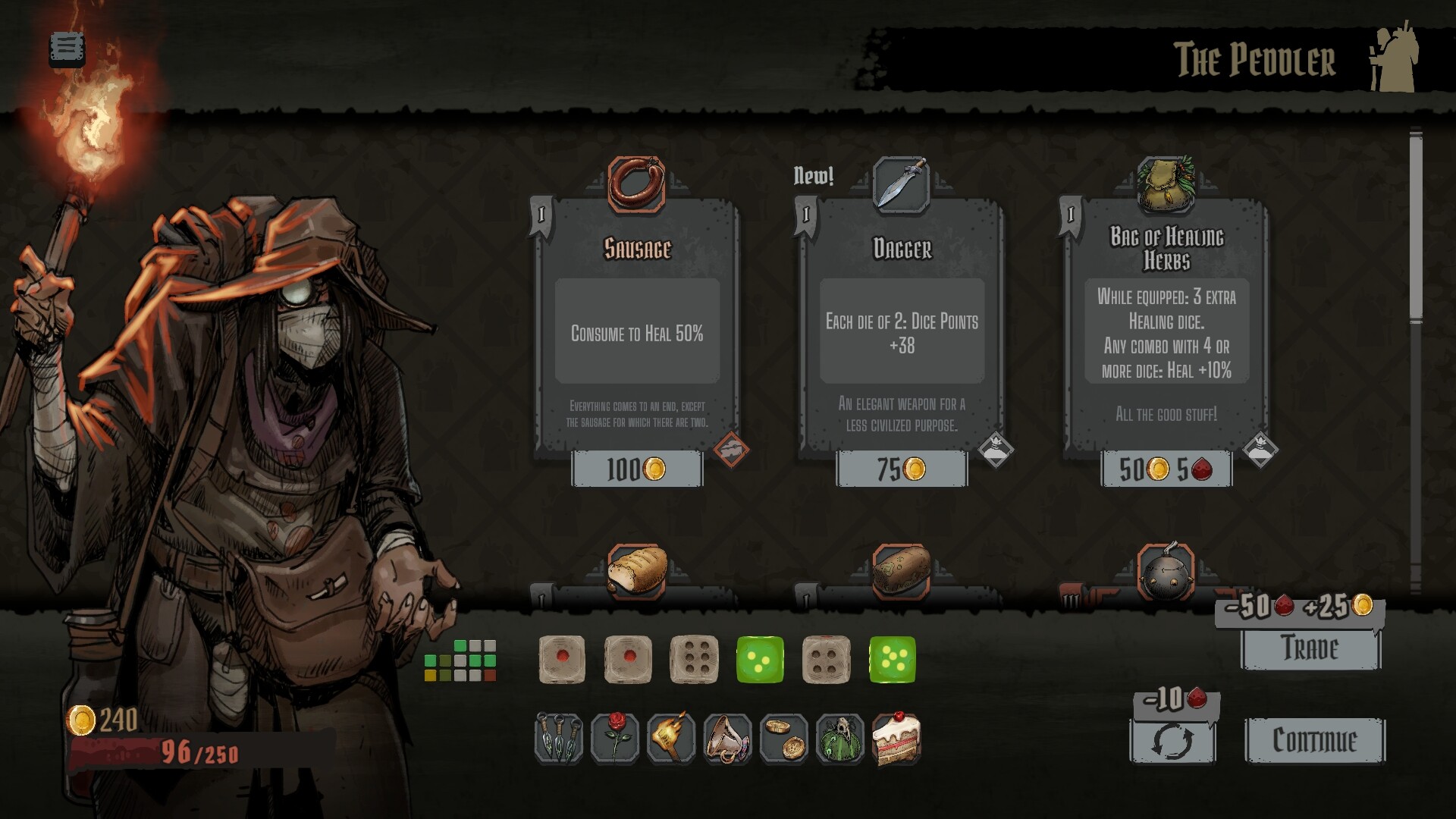
Learning how to play GrimKeep means learning a roguelite that stole the deckbuilder’s obsession with builds and replaced the deck with a bag of dice. You are not drawing five cards — you are rolling, rerolling, and shaping probabilities until poker-style combos fire Mult, items, and status effects hard enough to carve a path through a cursed city. This page walks the full loop using official preview language and developer explanations: what you do on the map, what a combat turn looks like, why Mult matters more than a single lucky face, and how damage grows from early tens into late thousands and beyond. If you still need platform and hero basics, skim Getting Started first. When you want formula-level detail, continue into Combat & Dice and Builds & Synergies.
The fantasy in one sentence
Find items, roll your dice, optimize the bag, and push damage high enough to cut through the horrors, reach the Princess, and end her. Resolution Games frames GrimKeep as a nightmare fairytale: dark fantasy art, Lovecraftian pressure, and a city that only yields to builds that understand probability.
The run structure
You traverse a node map familiar to anyone who has played modern roguelites. Most nodes are fights. Mixed in are shops, elites, campfires, and encounters with strangers who may gift progress or tax it. Your job is not to visit every node — it is to sequence risk so your bag and inventory spike before the region’s harder fights. Gold funds shops. Stronger dice and cleaner bags fund elites. Campfires repay greedy lines. Encounters are variance you choose when your HP buffer allows.
Between runs you unlock heroes, hero skills, and a deeper understanding of crafting systems. The full game ships with seven heroes, seven dice types, 30 hero skills, 200+ items, and 60+ monsters. Demo players only saw a portion of that content in the Outskirts, but the how-to-play fundamentals transfer.
Combat in plain language
A fight starts simple. You have five dice. You roll them, spend free rerolls, and chase a combo — pairs, straights, of-a-kind packages, and other poker- or Yatzy-like shapes. Combos award points that combine with the face values on the dice. That total is then multiplied by Mult before damage is applied. Items sitting in your small inventory rewrite any of those steps: more combo value, more Mult, triggered bonuses when certain faces show, poison, healing, gold, stuns, and stranger effects.
You do not have to throw every die into the attack. Dice left unsubmitted can form a defense package using the same combo logic. Sometimes you fully defend. Sometimes you split. The right answer depends on the enemy intent banner, which shows what the monster plans after your turn — often a raw attack number, sometimes a special. Official combat explainers stress reading that intent before you greed Mult.
Sacrifices exist as a last-ditch lever when a hit would kill you; the tutorial and later patches call attention to the sacrifice counter when death is imminent. Surviving with a thinner Mult line is still progress. Dying with a beautiful unused combo is not.
Watch the official gameplay preview
The embedded preview below is the studio’s own look at the loop — bag tuning, combo submissions, and the fantasy presentation. Use it as a visual companion to the text, then come back here for map and Mult context.
Why Mult beats “one big face”
New players often hunt a single spectacular combo and ignore the rest of the sheet. GrimKeep’s scoring is happier when multiple combo pieces and item triggers stack into Mult. Developer post-fest notes even called out that players who expected “one combo only” submissions left damage on the table. Train yourself to ask three questions every turn:
- What combos are already live on these five dice?
- Which Mult items fire if I submit this package?
- What defense do I still need against the intent?
That habit is the difference between early-game chip damage and the mid-to-late spikes the preview shows — numbers climbing from ordinary tens into thousands and, on tuned bags, six-figure turns.
Building the bag (not a deck)
Your long-term power is the dice bag, not a draw pile. You add dice, upgrade keepers, and cut faces that dilute the combos your items want. Special dice types can inject poison, healing, or gold into rolls so economy and offense share the same action. Think of every shop purchase as editing probability. A die that looked fine in fight one can be trash once your Mult plan needs three matching faces every turn.
Items are the other half of the machine. Strong runs discover synergies, then double down at the Crucible (melt items and abilities into something new) and the Ritual (add abilities onto pieces you want to keep). Those systems are covered in depth on the builds page; for how-to-play purposes, remember that inventory slots are scarce and identity beats hoarding.
Heroes change the lesson plan
How you play also depends on who you play. Beast can buy extra rerolls with health, teaching aggressive correction. Huntress banks unused rerolls across rounds, teaching patience and Mult items that scale with saved rerolls. Feral leans into Mult and high-roll faces with a fragile HP line and rich gold. Later heroes — Once Prince, Prisoner, Tailor, Dunce — remix those themes. Browse the heroes hub after you can execute a basic Mult turn without panicking.
Practical first-session goals
- Clear a few standard fights while always reading intents.
- Buy one Mult-centric item and cut one weak die the same shop visit.
- Practice splitting attack and defense instead of all-in every round.
- Note which special dice (poison, heal, gold) actually paid rent.
- After a loss, reread Combat & Dice for the math, not only the vibes.
How this page fits the rest of the wiki
Getting Started answers platforms, price, and first hero. This page answers the loop. Combat & Dice answers turn structure. Builds & Synergies answers item identity, Crucible, and Ritual. The tier list and release date pages answer ranking and calendar questions once you can already play.
GrimKeep is easy to misunderstand as a luck game. It is a probability-editing game. Learn to edit the bag, respect Mult, and spend map risk on purpose — that is how to play.
Frequently Asked Questions
Quick answers to the most common questions.
What is the core gameplay loop?
Route a node map, fight with five dice and rerolls, form poker-style combos, multiply through Mult and items, then spend gold to tune the bag for the next spike.
How does damage get so high?
Combo points plus dice faces feed a Mult multiplier, and items stack bonuses on those steps until early tens become thousands or six-figure turns on strong builds.
Do unused dice matter?
Yes. Dice not submitted for attack can form defense combos, and some heroes or items care about unused rerolls between rounds.
Is there a video that shows the loop?
Yes. This page embeds the official GrimKeep gameplay preview (YouTube ID Y5VVE-NAwJU) mid-article.
Where should I go after this guide?
Read Combat & Dice for turn details, then Builds & Synergies for Crucible, Ritual, and item archetypes.